Types of Vaginas: Common Vulva and Labia Shapes
Ever found yourself questioning if your vulva looks “normal”? The truth is, there’s no single standard for shape, size or appearance—real-life variation is far greater than most people realise.
When people mention different types of vaginas, they’re actually talking about the visible outer parts, known as the vulva. This area includes the labia majora, labia minora, clitoris and clitoral hood, all of which can differ naturally in shape, size, colour and how much they stand out.
There isn’t an anatomical rulebook everyone must follow. For some, the inner labia are hidden by the outer labia; for others, they’re more pronounced. One side may be longer, and the clitoral hood can be more or less noticeable. These are all normal differences, not flaws that need fixing.
This article isn’t about ranking bodies or deciding which look is most attractive. It’s here to help you understand the wide range of natural anatomy, bust some persistent myths, and explain why comparing yourself to a so-called “ideal” is rarely helpful.
The most typical vulva types
When it comes to how vulvas look, the diversity is striking. The size, position and visibility of both the inner and outer labia can vary hugely from person to person, and no single version is more “normal” than another.
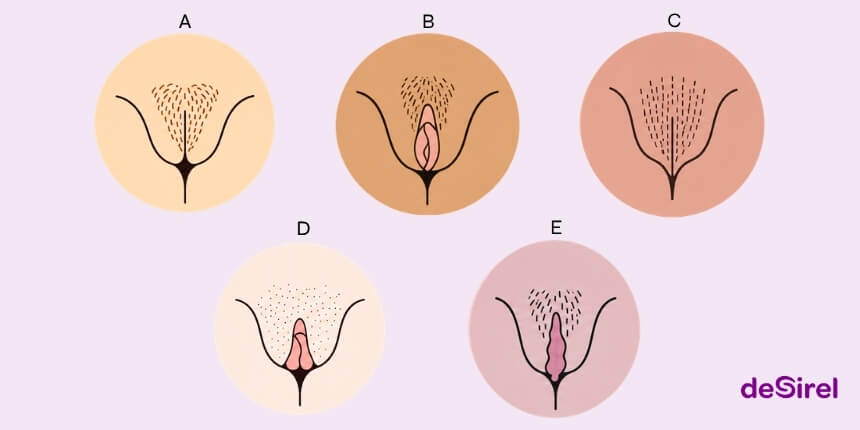
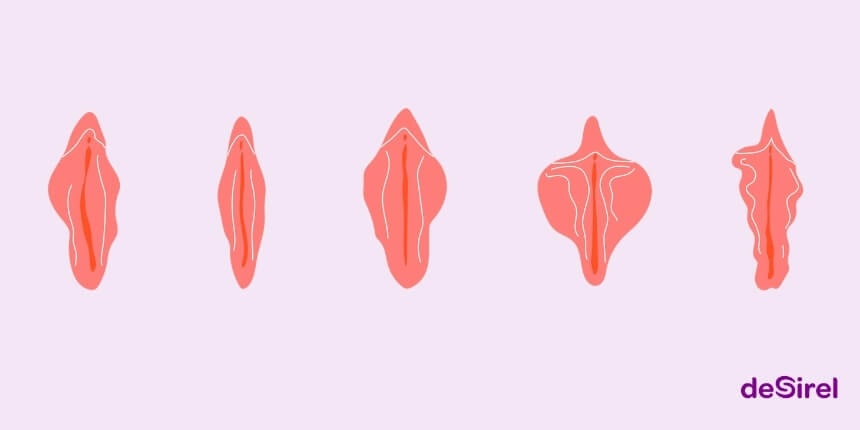
Most commonly, vulva or labia shapes are described based on how the inner and outer labia look in terms of size, placement and visibility. These are simply ways to describe what you see, not beauty standards or medical terms.
- Inner labia mostly hidden: Here, the outer labia cover the inner labia, giving a more closed look. Popular culture often treats this as the “standard,” but it’s just one of many natural variations.
- Inner labia more visible: In this case, the labia minora are longer or fuller and extend past the outer labia. This is very common, despite the myth that visible inner labia are a problem—they aren’t.
- Outer labia more pronounced: The labia majora are fuller or more noticeable, sometimes making the inner labia less visible. Their appearance can change over time due to age, body changes and hormones.
- Clitoris and hood more prominent: Some people naturally have a clitoris or clitoral hood that stands out more. How it looks doesn’t indicate sensitivity or what type of stimulation someone prefers.
- Uneven labia: One side may differ slightly from the other. This is worth mentioning, as it often causes unnecessary concern.
The point of these categories isn’t to label yourself. It’s to highlight just how much natural variation exists. Even people who fit into the same broad group can look quite different from each other.

What does it mean to have uneven labia?
Having labia that aren’t perfectly symmetrical is one of the most common variations, but it’s also something many people worry about.
It’s rare for both sides of the labia minora to be identical. One might be longer, fuller, more creased or a different shade than the other. Sometimes the difference is subtle, other times it’s more noticeable.
This is completely normal. Human bodies are naturally asymmetrical—just look at your ears, breasts, face, hands or even your fingers. Vulvas are no different.
Much of the anxiety comes from the narrow range of bodies shown in porn, adverts and carefully curated online images. When you see the same look over and over, it’s easy to think anything else is abnormal.
Erotic and commercial photos can be especially misleading—they’re not meant to show the full range of real anatomy. Models are chosen, poses are selected, lighting is controlled and images are often edited. What seems like a common standard is actually a very selective sample.
It’s not a reliable way to judge how your own body “should” look.
If you’re interested in learning how your body responds to touch, our guide to fingering techniques is a great next step. Discovering what feels good is usually far more rewarding than worrying about which category your vulva fits into.
Having uneven labia isn’t a problem in itself. What’s more important is how things feel. If you notice pain, ongoing itching, burning, unusual discharge or sudden changes in the skin, it’s worth speaking to a healthcare professional. These symptoms aren’t caused by asymmetry, but they should be checked out.
Why are photos a poor guide to what’s normal?
Trying to judge if your vulva is “normal” by comparing it to online photos is rarely accurate.
There are a few reasons for this.
- Lighting: Harsh or directional lighting can exaggerate folds, textures and shadows. Softer light can make the same anatomy appear smoother or less detailed.
- Camera angle: The way a vulva looks can change completely depending on whether someone is standing, sitting, lying down or photographed from a different angle.
- Editing and image selection: Erotic and commercial images don’t show a random sample of bodies. They’re chosen, posed, lit and sometimes digitally altered, making them a poor reference for real anatomy.
- Age and body changes: Skin tone, elasticity and the way soft tissue is distributed all change naturally over time. The vulva changes too, just like the rest of your body.
- Hormonal shifts: Hormones can affect how genital tissue looks and feels at different life stages. Pregnancy, childbirth and menopause all bring about natural changes.
- Arousal: When you’re turned on, blood flow increases to the genitals. The labia and clitoral tissue can swell and change colour, so your vulva might look quite different before and during arousal.
Even pictures of the same person can look very different depending on lighting, position and timing. A fold that stands out in one photo might be barely visible in another.
Put simply, a single photo can’t tell you if someone’s anatomy is “normal”—and it’s definitely not a sensible way to judge your own body.

What does a typical vulva look like?
There’s no one “normal” vulva shape, and certainly no universal definition of what’s beautiful.
For years, media, porn and beauty trends have promoted a narrow image of what genitals should look like. The reality is, real bodies don’t follow those rules.
Labia can be short, long, tucked in, visible, smooth, wrinkled, plump, thin, even or uneven. Colour varies too, and it’s perfectly normal for genital skin to be a different shade than the surrounding area. All of these are part of healthy anatomical diversity.
Ideas about a “beautiful vagina” are shaped more by culture and trends than by biology. What’s seen as attractive in one decade or online space isn’t a standard everyone else should meet.
Beauty is always subjective. What’s considered ideal by one person or at one time isn’t a biological fact—it’s just a preference, and those preferences change all the time.
Problems arise when a narrow visual ideal is repeated so much that people start to believe it’s reality. Someone with a perfectly healthy, normal vulva might still worry it looks “wrong” just because it doesn’t match the limited examples they’ve seen.
A much better question is whether your body feels comfortable and healthy.
Feeling at ease with your own anatomy can also make sex and intimacy less stressful. When you know what you enjoy, it’s much easier to share that with a partner rather than expecting them to magically know.
If you want to explore pleasure together, our cunnilingus tips and techniques are a great next step. Seeing the vulva as a responsive part of your body, not something to judge by appearance, can make talking about pleasure much more relaxed.
Body confidence isn’t about loving every inch of yourself every single day. It’s about realising that being different from what you see on a screen doesn’t mean you need to change anything.
It’s completely normal to feel unsure about intimate parts of your body, especially when most images show such a narrow range. Learning what real anatomical diversity looks like can help you focus on getting to know your own body instead of comparing it to unrealistic standards.
Your vulva doesn’t have to fit any mould.
And if you’d rather focus on discovering what feels good than worrying about how you look, try exploring different sensations with a clitoral vibrator or check out our selection of clitoral stimulators at Desirel.co.uk. The aim isn’t to change your body, but to understand, enjoy and feel at home in it.
Whether you’re new to oral sex or looking to seriously up your game, here’s your complete guide to cunnilingus: from first-timer tips and proven moves to the best positions, common pitfalls, and must-have products to keep nearby.
Whether you're looking to up your masturbation game or you're a guy hoping to give your partner the best time of her life, you've come to the right place. We're breaking down what makes clitoral stimulation truly unforgettable — especially when fingering is on the menu.
“We never thought squirting could feel this intense—she felt liberated, and I was completely blown away. It brought us closer in a way no other orgasm ever had.” Curious about how to experience this together? Dive into the full guide and unlock the secrets of squirting pleasure.
“Coochie juice” is taking over TikTok — but what’s the real story? Discover the science-backed truth behind your body’s natural lubrication.